

Hyper-Personalized Anticipatory Experiences to Increase Customer Retention

In the competitive landscape of 2026, the traditional metrics of customer satisfaction have undergone a radical transformation. We have moved beyond the “Reactive Era”—where brands waited for a customer to complain—and passed through the “Proactive Era”—where brands reached out with a fix. Today, we exist in the age of Anticipatory Design.

Hyper-personalization is no longer about simply inserting a name into an email or suggesting a product based on a past purchase. It is the art of solving a problem before the customer even realizes it exists. Anticipation is the new currency of loyalty; in a world of infinite choice, the brand that wins is the one that reduces the user’s cognitive load to nearly zero.

The Engine of Anticipation: Agentic AI and Multimodal Analysis

The leap from predictive to anticipatory experiences is powered by the rise of Agentic AI. Unlike traditional algorithms that require a human trigger, … READ MORE

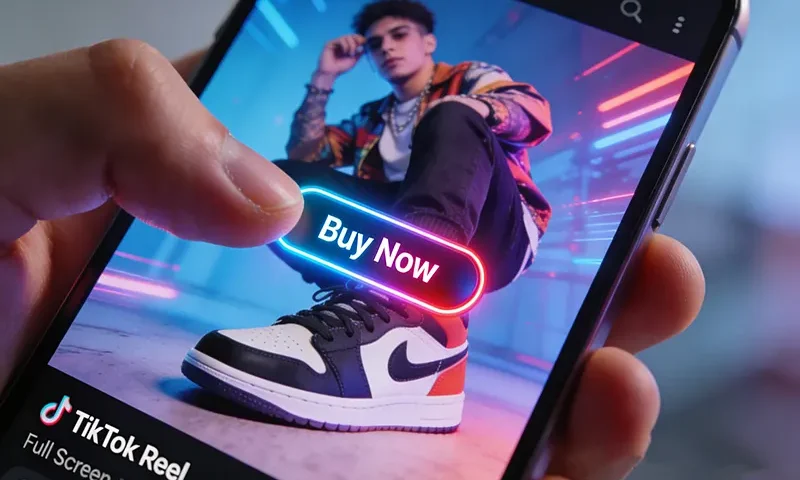
Implementing Zero-Click Social Commerce on TikTok and Instagram

In the digital economy of 2026, the traditional “Marketing Funnel” has collapsed into a single point of impact. For years, the industry standard for social commerce involved a series of high-friction steps: seeing an ad, clicking a “Link in Bio,” waiting for a landing page to load, and manually entering credit card details. This journey was a graveyard for conversion rates.

Today, we have entered the era of Zero-Click Social Commerce. In this new paradigm, the transition from “browsing” to “buying” is invisible. By leveraging in-app native checkouts and biometric authentication, brands are now able to turn a moment of inspiration into a completed transaction without the user ever leaving their social feed.

The Death of the Landing Page: Why Friction is the Enemy

The 2026 consumer, particularly the Gen Z and Gen Alpha cohorts, views the “external link” as an archaic interruption. Every click that takes a user … READ MORE

Optimizing Product Data for Multimodal and Visual Search Discovery

As we move through 2026, the traditional e-commerce search bar is becoming a secondary tool. With the full integration of multimodal capabilities into major platforms like Google Gemini and Bing, the way consumers find products has undergone a structural transformation. Today’s shopper doesn’t just type “blue wool sweater”; they might snap a photo of a texture they like, use a voice command to specify “merino, size medium,” and add a text filter for “sustainable sourcing”—all in a single, fluid query.

For brands, this means visibility is no longer just about ranking for keywords. It is about Search Experience Optimization (SXO) and Generative Engine Optimization (GEO). To thrive in this environment, product data must be optimized not just to be read by crawlers, but to be “seen” and “heard” by AI agents that synthesize answers from multiple data layers.

The Multimodal Shift: From Keywords to Intent

In the 2026 search … READ MORE

Integrating Agentic AI Payment Protocols for Autonomous Shopping

In the fintech landscape of 2026, we are witnessing the transition from “Conversational Commerce” to “Agentic Commerce.” For years, AI served as a sophisticated recommendation engine—a digital shop assistant that curated lists for human approval. Today, the paradigm has shifted toward Agentic AI: autonomous systems capable of reasoning, planning, and executing complex workflows without constant human intervention.

The most critical friction point in this evolution is the financial transaction. For an AI to truly shop on behalf of a human or an enterprise, it requires more than just an algorithm; it requires a Financial Identity and a secure, programmable payment protocol. Integrating these protocols is the final step in realizing the “Zero-Friction Economy.”

The Shift from Assistant to Agent: The Autonomous Mandate

Traditional e-commerce relies on the “Click-to-Pay” model, where a human must authenticate every transaction through a GUI (Graphical User Interface). Agentic AI bypasses the GUI entirely, interacting … READ MORE

Web Design Tips For Beginners and Businesses

Powerful web design is more than how a website looks. It covers everything, including functionality, user experience, brand communication, and more. When search engines crawl through your website for ranking, they check how optimised your web design in NZ is.

Therefore, in this article, we will discuss some of the best web design tips for beginners and businesses to meet their business goals. So, if you are new to the world of domain and web hosting and planning to build your website, then keep reading.

Web Design Tips for Beginners and Businesses

1.      Create a Structural and Design Hierarchy

Creating a structured hierarchy of the websites you want to create is one of the best web design tips you will ever find. When you create a structural hierarchy of your web design, you know how your content will flow, how the navigation will work and what key elements to prioritise. … READ MORE