
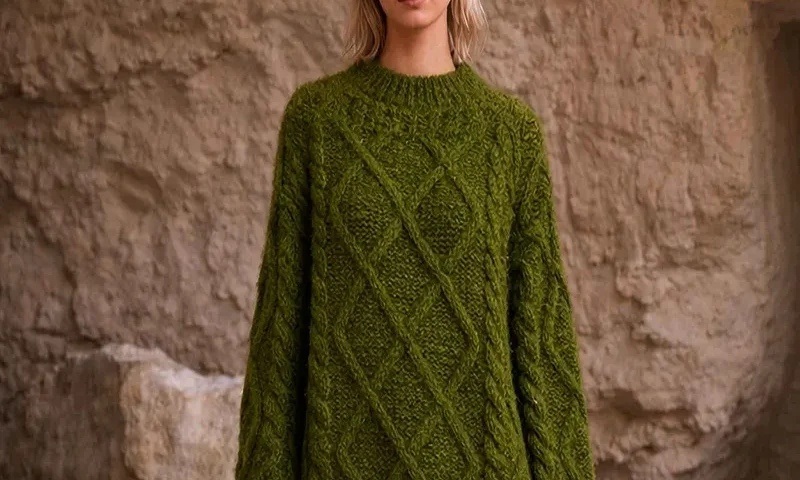
In the fashion landscape of 2026, the concept of luxury has undergone a radical shedding of skin. The loud logos and transient trends of the previous decade have been replaced by a philosophy of Radical Longevity—a movement popularly known as “Quiet Luxury.” However, this isn’t just an aesthetic of beige and navy; it is a movement toward the “Invisible Excellence” of a garment.
True luxury in 2026 is found in the Digital Product Passport that lives within a sweater’s seam, proving its carbon-neutral journey and the ethical treatment of the animals that provided its fiber. At the pinnacle of this movement stands the sophisticated blend of Sustainable Alpaca and RWS-certified Merino wool.
The Alchemy of the Blend: Why Alpaca and Merino?
To understand the allure of this specific knitwear, one must look at the “Micron Count”—the measurement of the diameter of the fiber. In the world of high-end textiles, a lower micron count signifies a softer feel against the skin. While traditional wool can feel abrasive, the sustainable blends of 2026 rival the softness of cashmere while offering superior durability.
The Alpaca Layer: The Fiber of the Gods
Alpaca fiber, specifically “Baby Alpaca” (a term denoting the fineness of the grade, typically under 22 microns, rather than the age of the animal), is a thermal marvel. Unlike sheep’s wool, alpaca fibers are hollow. This microscopic air pocket acts as a natural insulator, trapping heat in the winter and allowing for incredible breathability in the spring.
- The Drape: Alpaca has a unique lack of lanolin, making it naturally hypoallergenic and giving it a silk-like weight that hangs beautifully on the body without losing its shape.
The Merino Layer: The Breathable Anchor
Merino wool provides the “architecture” of the garment. By using Responsible Wool Standard (RWS) certified Merino, brands ensure that the wool comes from farms that prioritize land management and animal welfare.
- The Synergy: When blended with Alpaca, Merino adds “memory” to the knit. It provides the natural elasticity that allows a sculptural cardigan to bounce back after a long day of wear, ensuring the garment doesn’t “bag out” at the elbows or hem.
The Ethics of the Highlands: Traceability and Regenerative Grazing
In 2026, the “Quiet” in Quiet Luxury also refers to a quiet conscience. The luxury consumer now demands a Traceable Shearing process.
Regenerative Grazing
In the Peruvian Andes (the home of the Alpaca) and the Australian Outback (the heart of Merino), the focus has shifted to Regenerative Grazing. This practice ensures that the animals are rotated across pastures in a way that allows the soil to sequester carbon and the native grasses to thrive. This “holistic management” makes these fibers some of the most climate-positive materials in the world.
Blockchain Transparency
Through the use of blockchain-backed labels, a buyer can now scan a QR code and see the specific farm, and often the specific flock, where their sweater began. This “Heritage of Softness” connects the wearer to the shepherd, transforming a simple purchase into a piece of documented history.
The Investment Capsule: Three Essential Silhouettes
A Quiet Luxury wardrobe is not about quantity; it is about the “Investment Capsule”—pieces designed to be worn for decades, not seasons.
1. The Sculptural Cardigan
In 2026, the cardigan has been reimagined as a piece of “soft architecture.” Utilizing 3D-knitting technology, these cardigans are often Seamless (Zero-Waste), featuring an oversized drape and a heavy gauge that feels like a protective cocoon.
2. The Fine-Gauge Mock Neck
The “Second-Skin” mock neck is the ultimate layering piece. By using a blend with a micron count below 17.5, designers have created a knit that is soft enough to be worn directly against the skin, providing a moisture-wicking layer that is as functional as it is elegant.
3. The Travel Set
For the global nomad, the Alpaca-Merino travel set—consisting of wide-leg knit trousers and a matching wrap—is the gold standard. These pieces are naturally crease-resistant and odor-neutral, making them the perfect companion for long-haul flights where comfort and composure must coexist.
The Heirloom Mindset: A Guide to Longevity
The most sustainable garment is the one you never throw away. Because these fibers are natural and high-quality, they require specific “Slow-Tech” maintenance to ensure they last a lifetime.
Knitwear Care & Longevity Guide
- Resting the Fibers: Never wear the same knit two days in a row. These fibers need 24 hours to “rest” and return to their original shape.
- The Cedar Standard: Store your knits folded (never hanging) in cedar chests or with cedar blocks to naturally deter moths and maintain a fresh scent.
- Cold-Water Therapy: Hand-wash in cold water with a pH-neutral detergent only when necessary. Often, simply “airing out” a Merino-Alpaca blend on a breezy day is enough to refresh it.
- Depilling: Use a dedicated fabric comb to gently remove pills. High-quality knits will “shed” their initial loose fibers; once these are removed, the pilling will drastically decrease.
The Future is Felt
Luxury in 2026 is a tactile narrative. It is the story of the Peruvian highlands, the regenerative pastures, and the artisan mills that refuse to compromise on quality. By choosing Sustainable Alpaca and Merino blends, the modern individual is opting for a “Heirloom Mindset”—choosing to invest in pieces that age with grace and tell a story of ethical elegance.
In the end, Quiet Luxury isn’t about being noticed; it’s about being understood. It is the quiet confidence that comes from wearing a garment that is as kind to the planet as it is to the skin. The future of fashion is not found in the new, but in the enduring beauty of the perfectly crafted knit.

