
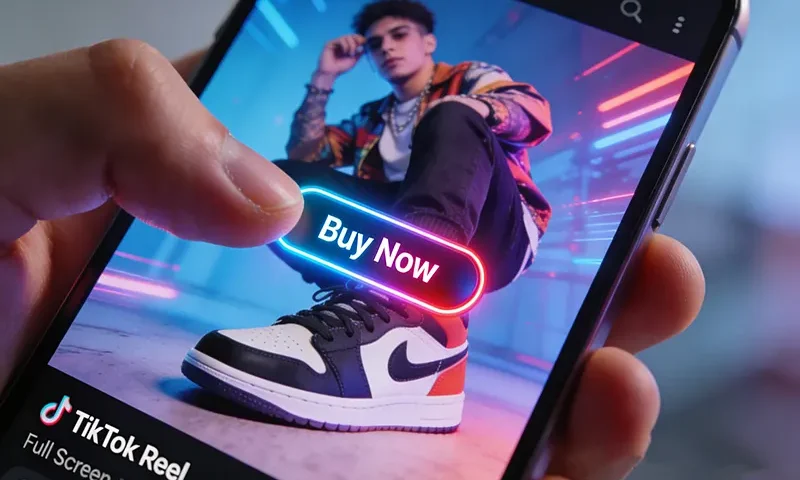
In the digital economy of 2026, the traditional “Marketing Funnel” has collapsed into a single point of impact. For years, the industry standard for social commerce involved a series of high-friction steps: seeing an ad, clicking a “Link in Bio,” waiting for a landing page to load, and manually entering credit card details. This journey was a graveyard for conversion rates.
Today, we have entered the era of Zero-Click Social Commerce. In this new paradigm, the transition from “browsing” to “buying” is invisible. By leveraging in-app native checkouts and biometric authentication, brands are now able to turn a moment of inspiration into a completed transaction without the user ever leaving their social feed.
The Death of the Landing Page: Why Friction is the Enemy
The 2026 consumer, particularly the Gen Z and Gen Alpha cohorts, views the “external link” as an archaic interruption. Every click that takes a user away from their preferred content stream represents a 20% to 30% drop in transactional intent.
Zero-Click commerce solves this by treating the social app not as a billboard, but as a decentralized storefront. When a user encounters a product in their feed, the “shopping” happens in the background. The landing page has been replaced by the Product Detail Overlay, a lightweight, API-driven interface that appears instantly, powered by the platform’s native ecosystem.
Platform Specifics: The 2026 Duopoly of Commerce
While many platforms have attempted social commerce, TikTok and Instagram have emerged as the dominant infrastructures, each utilizing a different psychological hook.
TikTok Shop: The Live-Stream Powerhouse
TikTok has perfected “Shoppable Entertainment.” In 2026, TikTok Shop relies heavily on AI-powered Instant Buy triggers during live streams. As a creator demonstrates a product, the app’s computer vision identifies the item and pushes a “One-Tap” purchase button directly onto the video player.
- The Technical Edge: TikTok’s commerce engine is now integrated with global logistics providers via real-time Graph APIs, allowing for localized shipping estimates and inventory checks to happen in milliseconds before the user even taps.
Instagram: The Visual Catalog and Direct-to-DM
Instagram has moved toward a “Conversational Commerce” model. Utilizing Meta Pay, the platform has streamlined the checkout process into a biometric event.
- Direct-to-DM Workflow: Brands are increasingly using automated AI agents within DMs to finalize sales. If a user “Likes” a shoppable post, an agent can initiate a DM that offers a personalized discount, allowing the user to say “Yes” and complete the buy via a FaceID prompt without ever typing a word.
The Tech Stack of Zero-Click: Identity and Speed
Implementing a Zero-Click strategy requires a fundamental rethink of your brand’s technical architecture. You are no longer managing a website; you are managing a Synchronized Data Feed.
In-App Wallets and Biometrics
The backbone of Zero-Click is the integration with Apple Pay, Google Pay, and Platform Wallets (like TikTok Coins or Meta Pay). By utilizing the biometric hardware on a user’s device, the “Checkout” button is replaced by a “Confirm with FaceID” prompt. This reduces the time-to-transaction from minutes to less than three seconds.
AI-Personalized Dynamic Pricing
In 2026, the price a user sees is not static. Using real-time engagement metrics, brands can implement Dynamic Discounting. If an AI agent detects that a high-value customer has watched a video three times but hasn’t tapped, it can inject a “Limited 5-Minute Discount” into the overlay, creating an immediate incentive to act.
Zero-Knowledge Proofs (ZKP) for Trust
To combat the rising concerns over data privacy, 2026 protocols utilize Zero-Knowledge Proofs. This technology allows the platform to verify that a user has sufficient funds and a valid shipping address without ever sharing the user’s raw financial data with the merchant. This builds the radical trust necessary for a user to spend money “on a whim.”
Optimizing Content for Transactional Intent
In a Zero-Click world, content is no longer “Awareness”—it is the “Transaction.”
From Ads to Shoppable Assets
Content must be designed with “Tap-Zones” in mind. High-performing brands are moving away from traditional commercials and toward Shoppable UGC (User Generated Content). When a real customer posts a video of your product, your “Managed Identity” AI can automatically tag the products and enable the Zero-Click protocol, essentially turning every customer into a micro-storefront.
The “Agentic” Influence
We are seeing the rise of the Buyer’s AI Agent. In some advanced 2026 workflows, a user’s personal AI agent scans their social feed for them. If the agent sees a product the user needs—based on their calendar or past preferences—it can negotiate with the brand’s AI and finalize the purchase in the background. The user simply receives a notification: “I found those running shoes you needed on TikTok; they’ll be here tomorrow.”
Zero-Click Implementation Checklist
- [ ] Native Catalog Sync: Is your Shopify or BigCommerce store synced via real-time API (not just a daily CSV upload)?
- [ ] Biometric Readiness: Have you enabled Meta Pay and TikTok Shop native checkout?
- [ ] Edge Computing: Is your product data hosted on a CDN to ensure the Product Overlay loads in <300ms?
- [ ] Identity Management: Are you using OIDC (OpenID Connect) for seamless user authentication?
- [ ] ZKP Integration: Does your payment processor support Zero-Knowledge Proofs for enhanced user privacy?
The Zero-Friction Future
The implementation of Zero-Click social commerce represents the final frontier of retail convenience. By meeting the consumer exactly where they are—in the middle of their entertainment stream—and removing every physical and psychological barrier to entry, brands are redefining the act of shopping.
In 2026, shopping is no longer a destination; it is a feature of the atmosphere. As TikTok and Instagram continue to evolve their native infrastructures, the brands that thrive will be those that view “friction” as a failure of design. We are moving toward a Zero-Friction economy where the only thing between a consumer and a product is a moment of desire and a glance at their phone. The future of retail is silent, instant, and entirely effortless.

