
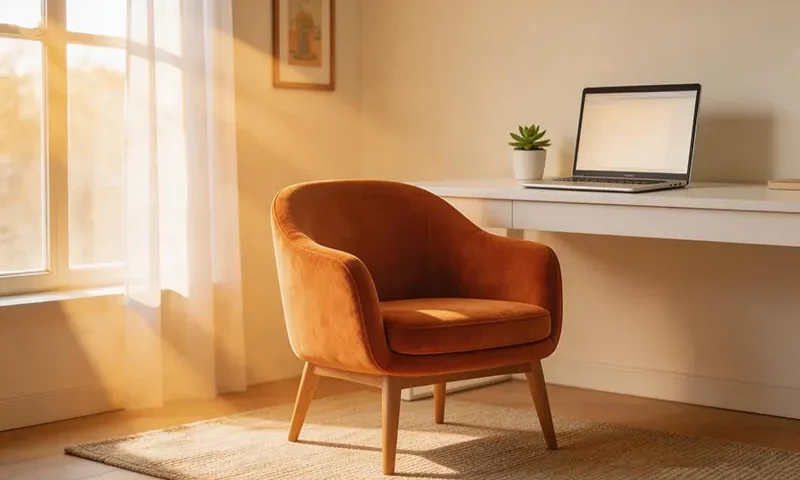
In the design landscape of 2026, the sterile, ultra-minimalist home office is officially a thing of the past. As we continue to blur the lines between professional and personal spheres, a major shift toward “Character-Rich Workspaces” has taken hold. Leading this movement is the 1970s Retro Revival—a trend that swaps cold industrial lines for organic curves, chromatic earth tones, and tactile fabrics that foster a sense of creative sanctuary.
The centerpiece of this transformation? The accent chair. No longer just a “spare seat” in the corner, the 70s-inspired accent chair has become the ultimate “system piece”—providing a soft place to land during deep-focus sessions or a stylish backdrop for the endless stream of video calls. Best of all, achieving this high-end vintage look no longer requires a designer’s budget.
The Anatomy of a 70s Accent Chair
To find the right piece for your space, you must first understand the visual language of the era. The 1970s was a decade of experimentation with form and materiality, moving away from the rigid structures of the 50s and 60s.
1. Space Age Curves and Trumpet Bases
The 70s were obsessed with “the future.” This resulted in fluid, “Space Age” silhouettes—rounded backs, sloping arms, and the iconic Trumpet Base. These swivel-heavy designs are perfect for a home office, allowing you to rotate between your desk and a side table without the clunky look of a standard task chair.
2. Chromatic and Earthy Palettes
Color is the easiest way to inject 70s soul into a room. In 2026, we are seeing a return to Rust Reds, Mustard (Curry) Yellows, Avocado Greens, and Tobacco Browns. These colors aren’t just bold; they are psychologically grounding, providing a “warmth” that sterile white offices lack.
3. Tactile Textures
The 70s were the decade of touch. When shopping, look for:
- Recycled Velvet and Velour: Offers a shimmering, luxurious depth.
- Bouclé and Chenille: Provides “cloud-like” comfort and visual weight.
- Chrome and Warm Softwoods: The contrast between cool metal and textured wood (like walnut or teak-look finishes) is a hallmark of 2026 retro-modernism.
Top Affordable Picks for 2026
You don’t need to haunt high-end estate sales to find these looks. Several accessible brands have released “Retro Collections” that hit the mark for under $500.
The “Mojo” Swivel (Best for Hybrid Work)
The Mojo and Elvi Swivel Armchairs have become 2026 staples. These chairs feature a deep, circular seat upholstered in rich chenille or curry-melange bouclé. Because they swivel 360 degrees, they function as both a lounge chair for reading and a “perch” for casual laptop work.
- Budget Tip: Look to brands like Sabai Design for “recycled velvet” versions that use upcycled water bottles, combining retro style with modern ethics.
The Cantilever Chrome Classic
Nothing says “70s Professional” like a cantilever chair. Based on the “S-shaped” chrome frame, these chairs offer a natural “spring” that makes them surprisingly comfortable for long periods.
- Where to Buy: IKEA continues to lead in accessible retro design with updated cantilever models that use FSC-certified woods and ribbed upholstery for under $200.
The “Low-Slung” Lounge
For “soft work” (like answering emails on a tablet), the low-slung lounge chair is king. These chairs sit closer to the ground and usually feature tapered wooden legs.
- Secondary Market Gold: Check Etsy or Kaiyo for professionally refurbished mid-century pieces. You can often find a “Space Age” molded plastic or barrel-back chair for less than the price of a new mass-market alternative.
Ergonomics Meets Aesthetics: The 2026 Standard
One common critique of vintage furniture was that it “wasn’t built for work.” However, 2026 manufacturers have solved this. Many retro-inspired chairs now feature Improved Lumbar Geometry hidden beneath the plush velvet.
When choosing your chair, look for a seat width of at least 26 inches. This allows for multiple sitting positions—a vital feature for “Neuroinclusive” design, which recognizes that many people concentrate better when they can shift their posture or sit cross-legged. These rounded, “sensory-calm” shapes help reduce the visual noise of the office, creating a more relaxed environment for high-stakes focus.
70s Office Material Palette
- Primary Fabric: Recycled Velvet (Rust or Sage).
- Frame: Chrome or Matte Walnut.
- Accent Textures: Woven Rattan or Corduroy.
- Grounding Element: A high-pile shag rug or a warm terracotta floor lamp.
The Personality-Driven Office
A single 70s-inspired accent chair can act as the anchor for an entire room. It signals that your home office is more than just a place of labor; it is a soulful sanctuary that reflects your personal taste and a commitment to longevity.
By choosing affordable, sustainable, and character-rich pieces, you are moving away from the “disposable” office culture of the past decade. In 2026, the most productive workspaces aren’t the ones that look like a corporate cubicle—they are the ones that feel like home. Whether it’s a rust-colored velvet swivel or a sleek chrome cantilever, your chair should be a seat that invites you to stay awhile, long after the final meeting of the day is over.

