
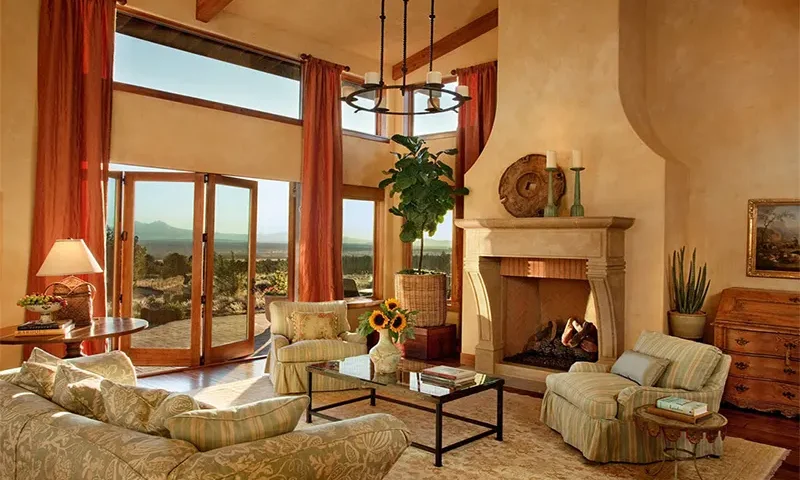
In the architectural landscape of 2026, we are witnessing a profound “Renaissance of the Rural.” The cluttered, dark, and heavy “Old World” Tuscan style that dominated the early 2000s—defined by faux-finished walls and ornate ironwork—has been stripped back to its soul. What remains is Modern Tuscan Organic: a sophisticated, minimalist aesthetic that honors the raw materiality of central Italy while embracing the airy, sculptural lines of contemporary design.
The Modern Tuscan living room is not a set of furniture; it is a curated sensory retreat. It prioritizes the “haptic” quality of a home—the way a hand feels as it brushes against a cool stone ledge or the warmth of sunlight on a reclaimed timber beam. By focusing on the primal combination of stone and wood, this design movement creates spaces that feel both ancient and current.
The Foundation: The Dialogue Between Stone and Wood
The brilliance of Modern Tuscan design lies in the balance of opposites. It is a dialogue between the “eternal” (stone) and the “organic” (wood).
The Stone Layer: Grounding the Space
Stone provides the structural and visual anchor for a Modern Tuscan set. In 2026, the palette has shifted away from high-gloss granite toward honed and matte finishes.
- Travertine and Limestone: These are the hallmarks of the style. Their porous, tactile surfaces and creamy, sun-baked hues bring a sense of history into a room.
- Rough-Cut Marble: Unlike the polished marble of art deco styles, Modern Tuscan utilizes “tumbled” or “raw” edges. These stones are used for coffee table tops, fireplace surrounds, and even integrated shelving, providing a cooling effect that is essential for the “Mediterranean” atmosphere.
The Wood Layer: The Heart of the Room
If stone is the skeleton, wood is the heart. Modern Tuscan furniture utilizes timber that tells a story.
- Reclaimed Chestnut and Distressed Oak: These woods are prized for their visible grain, knots, and “imperfect” patinas.
- Matte Walnut: For a more refined take, matte-finished walnut offers a dark, espresso-like richness that grounds the lighter stone elements.
- Live Edges: In 2026, we see a move toward sculptural wood pieces—sofas with thick timber bases or side tables carved from a single trunk—honoring the tree’s original form.
Curating the Modern Tuscan Living Room Set
Building a Modern Tuscan living room requires a move away from “matching sets” in favor of a curated collection of investment pieces that share a common material language.
1. The Statement Seating
The modern sofa has moved away from heavy leather and toward oversized, low-profile linen.
- The Sofa: Imagine a deep-seated sectional in “Oatmeal” or “Warm Clay” linen. The upholstery is breathable and relaxed, often featuring “blind stitching” to maintain a clean, minimalist silhouette.
- The Accent Chairs: These often serve as the sculptural “jewelry” of the room. A chair with a hand-carved oak frame and a woven rush seat or bouclé cushion provides a beautiful contrast to the sprawling softness of the sofa.
2. The Stone Anchor: The Coffee Table
The center of the Modern Tuscan room is almost always a heavy, honed stone table. This piece acts as a monolith. Whether it is a circular slab of travertine on a thick wood pedestal or a rectangular block of limestone, it provides a permanent, architectural focal point. It is a surface designed for more than just books; it is a tactile piece of the Earth brought indoors.
3. The Storage: Credenzas and Media Consoles
Modern Tuscan storage pieces blend utility with artistry. Consoles are often finished in lime-washed wood, featuring stone-top inlays or hand-forged iron handles. By keeping the heights low, the room maintains an airy, “gallery-like” feel, allowing the textures of the stone and wood to remain the primary focus.
Lighting, Walls, and Ambient Textures
To truly complete the Modern Tuscan look, the furniture must exist in a space that supports its materiality.
- The “Fifth Wall”: 2026 trends emphasize plaster and lime-wash walls. These finishes create a soft, mottled texture that catches the light, mimicking the sun-bleached villas of Siena.
- Slender Wrought Iron: While iron is a Tuscan staple, the modern version is slender and architectural. Think of minimalist, floor-to-ceiling iron shelving or thin-framed chandeliers that provide light without visual clutter.
- Biophilic Integration: No Tuscan room is complete without the green of the landscape. A single, large-scale indoor olive tree or a cluster of terracotta pots filled with sage and rosemary connects the interior stone to the exterior world.
Modern Tuscan Material Palette
- Primary Stone: Honed Travertine or Matte Limestone.
- Primary Wood: Distressed White Oak or Reclaimed Chestnut.
- Upholstery: Heavy Belgian Linen in Cream, Clay, or Sage.
- Hardware: Burnished Bronze or Slender Wrought Iron.
- Accents: Terracotta and Matte Ceramic.
A Timeless Sanctuary
The appeal of the Modern Tuscan living room lies in its refusal to be hurried. In an age of disposable “fast furniture,” this style is an investment in longevity and patina. It is a design philosophy that understands that a stone table will only get better as it is used, and a reclaimed wood chair will only become more beautiful as it wears.
By focusing on the raw, honest beauty of stone and wood, we create a sanctuary that feels grounded in the history of the earth but tailored to the needs of modern life. It is “Quiet Luxury” at its most authentic—a space that doesn’t need to shout to be recognized as extraordinary. The Modern Tuscan room is designed to age beautifully, ensuring that your home remains a timeless retreat for decades to come.

