
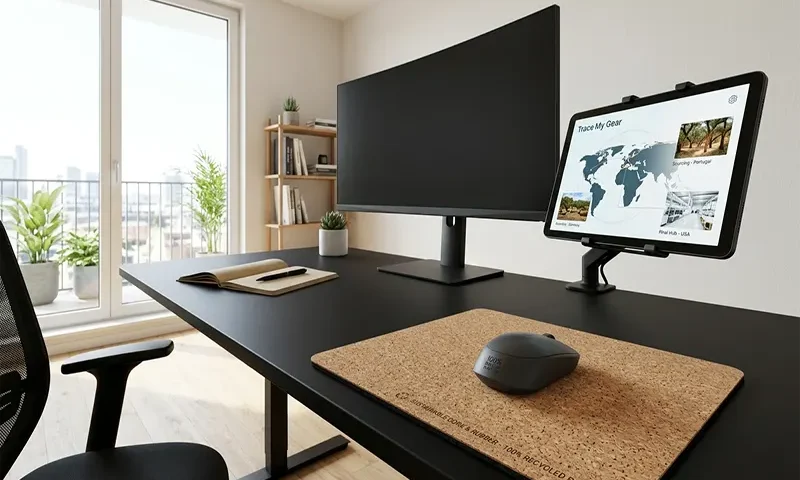
The global shift toward remote work was initially hailed as a victory for the environment—fewer commutes meant a drastic reduction in carbon emissions. However, as the “home office” transitioned from a temporary kitchen-table setup to a permanent fixture of modern life, a new environmental and ethical challenge emerged. The sudden surge in demand for desks, ergonomic chairs, and tech peripherals led to a gold rush for mass-produced furniture, often sourced through opaque, complex supply chains that hide significant ecological and human costs.
In 2026, the standard for “green” has shifted. It is no longer enough for a product to be made of “recycled materials.” Consumers are now demanding Radical Transparency. This means looking for a Traceable Supply Chain: a system where every step of a product’s journey—from the extraction of raw materials to the final assembly—is documented, verified, and open to public scrutiny.
The Pillars of an Ethical Workspace
Building an ethical home office requires looking beyond the aesthetic. To ensure your workspace aligns with global safety and sustainability values, three core pillars must be addressed.
1. Labor Ethics and Human Dignity
A desk is not ethical if the person who built it was not paid a living wage or worked in unsafe conditions. Traceability allows consumers to verify certifications like Fair Trade or SA8000. These frameworks ensure that workers throughout the tier-one and tier-two supplier levels are treated with dignity, provided with healthcare, and operate in environments free from exploitation.
2. Material Integrity and Chemical Safety
The average “flat-pack” desk often contains Medium-Density Fibreboard (MDF), which can off-gas formaldehyde and other Volatile Organic Compounds (VOCs) into your home. An ethical supply chain prioritizes FSC-certified (Forest Stewardship Council) solid woods and non-toxic, plant-based finishes. Traceability ensures that the wood wasn’t illegally harvested from protected rainforests, but rather from managed forests that support local biodiversity.
3. The Carbon Loop and Circularity
True traceability accounts for the “miles” a product travels. Ethical brands are increasingly moving toward localized manufacturing or “regional hubs” to reduce the carbon footprint of shipping. Furthermore, they design for circularity—ensuring that at the end of its life, your office chair can be disassembled and the materials returned to the production loop rather than a landfill.
The Essentials Breakdown: What Traceability Looks Like
To build an ethical WFH setup, you must evaluate the “Chain of Custody” for each category of equipment.
Furniture: The Desk and Chair
For furniture, the gold standard is Digital Product Passports (DPPs). By scanning a QR code on a desk, a user should be able to see the specific mill where the timber was processed and the workshop where it was joined.
- The Desk: Look for solid, North American or European hardwoods. Avoid “veneer” over mystery cores.
- The Chair: The modern ergonomic chair is a complex assembly of plastics, metals, and foams. Seek out brands that use Ocean-Bound Plastic and provide a breakdown of recycled content percentages by weight.
Electronics and Tech Accessories
This is the most difficult area for traceability due to the “conflict mineral” trade (tin, tungsten, tantalum, and gold). However, innovative brands are now using Blockchain Tracking to ensure that the minerals in your laptop stand or charging hub are sourced from mines that do not fund armed conflict.
- Cabling: Look for braided cables made from recycled nylon and PVC-free casings.
- Lighting: Choose LED lamps with replaceable components. The most “unethical” product is one that must be thrown away entirely because a single bulb or circuit failed.
Textiles: Rugs and Acoustic Panels
Home offices can be acoustic nightmares. When choosing rugs or sound-dampening panels, traceability focuses on Regenerative Agriculture.
- Organic Wool: Traceable wool ensures the sheep were treated humanely (mulesing-free) and the land was managed to sequester carbon.
- Recycled Felt: Many acoustic panels are now made from 100% post-consumer PET (plastic bottles), with clear documentation of the collection source.
How to Verify a Brand’s Claims
In an era of “greenwashing,” where every brand claims to be “eco-friendly,” how does a consumer separate marketing from reality?
Digital Product Passports & Blockchain
Technology is now the greatest ally of the ethical consumer. Many leading sustainable firms now use blockchain to create an unalterable record of the supply chain. If a brand cannot tell you the city where their primary factory is located, their supply chain is not traceable.
Third-Party Certifications
Look for the “Big Three” of accountability:
- B-Corp Certification: Measures a company’s entire social and environmental performance.
- 1% for the Planet: Verifies that a portion of gross sales goes directly to environmental nonprofits.
- Greenguard Gold: Ensures the product meets some of the world’s most rigorous third-party chemical emissions standards.
The Traceability Checklist
Before purchasing a new WFH essential, ask these four questions:
- Origin: Can I identify the specific country (or province) where the raw materials were sourced?
- Composition: Is the product made of mono-materials (easy to recycle) or complex glues and composites?
- Labor: Does the brand publish an annual social impact report or modern slavery statement?
- End-of-Life: Does the company offer a “take-back” program or a repair kit?
The Workspace as a Reflection of Values
Our homes have become our sanctuaries and our centers of productivity. If we spend forty hours a week at a desk, that desk should represent the world we want to live in. Investing in Ethical Work-from-Home Essentials is a rejection of the “disposable” culture that has dominated the last two decades.
Choosing traceable products is an act of “buying once and buying well.” It shifts the focus from the lowest possible price to the highest possible value—value for the worker who made it, value for the planet that provided the materials, and value for you, the user, who can work with the peace of mind that your professional success isn’t built on someone else’s exploitation. Your workspace is more than just a place to answer emails; it is a physical manifestation of your global footprint. Make sure it’s a footprint you’re proud to leave behind.

