
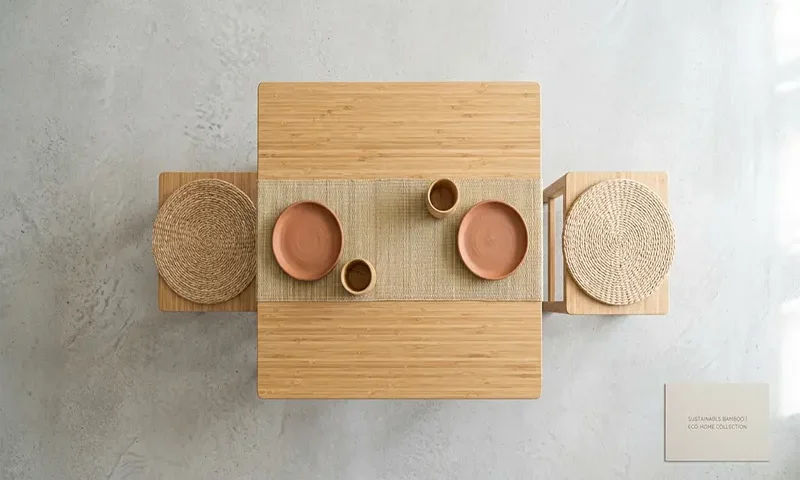
In the modern era of urban living, the definition of a “luxury home” has shifted. We are moving away from sprawling, cavernous mansions and toward the “Conscious Small Home.” Whether it is a studio apartment in a vertical city or a secluded tiny house on wheels, the footprint of our living spaces is shrinking—not out of necessity alone, but as a deliberate choice to live more intentionally.
In a smaller home, every piece of furniture must earn its keep. There is no room for “filler.” This is why the dining table, often the literal and metaphorical heart of the home, must be chosen with rigorous attention to both its spatial efficiency and its environmental impact. Enter the Sustainable Bamboo Dining Table: a masterpiece of engineering that offers a solution for the eco-conscious minimalist.
Why Bamboo? The Ultimate Eco-Material
To understand why bamboo is the gold standard for sustainable furniture in 2026, we must look beyond its aesthetic appeal and into its biological profile. Often mistaken for wood, bamboo is actually a giant grass, and this distinction makes all the difference for the planet.
The Carbon-Capture Giant
Bamboo is one of the fastest-growing plants on Earth. Some species can grow up to 36 inches in a single 24-hour period. Because it grows so rapidly, it sequesters carbon dioxide far more efficiently than traditional hardwoods like oak or maple. When bamboo is harvested, the root system remains intact, allowing the plant to regenerate without the need for replanting or heavy tilling. This makes it a truly renewable resource.
The “Moso” Standard
Not all bamboo is created equal. High-end furniture typically utilizes Moso bamboo. For the ethically minded consumer, Moso is particularly important because it is not the variety of bamboo that pandas eat, ensuring that furniture production does not interfere with the natural food supply of endangered wildlife. Moso bamboo is incredibly dense, boasting a Janka hardness rating that often exceeds that of white oak and carbonized bamboo.
Design Solutions for Small-Space Living
Small-space design is a game of inches. A table that feels grand in a showroom can easily “suffocate” a 500-square-foot apartment. Bamboo’s high strength-to-weight ratio (often referred to as “green steel”) allows designers to create furniture that is structurally sound but visually light.
1. The Drop-Leaf and Gateleg
The drop-leaf table is the ultimate “transformer” for small homes. Because bamboo is so sturdy, manufacturers can create incredibly thin, durable folding leaves. A bamboo drop-leaf table can function as a console against a wall during the day and expand to seat four people for dinner.
2. The Round Pedestal Table
In tight quarters, corners are the enemy of “flow.” A round bamboo pedestal table eliminates sharp edges, making it easier to navigate a small kitchen or dining nook. The single center pedestal also maximizes legroom, allowing you to tuck chairs in completely when the table is not in use, reclaiming vital floor space.
3. The Multi-Purpose Desk-to-Dining
With the rise of permanent remote work, many small-home dwellers need their dining table to double as a workstation. Bamboo’s naturally light grain and smooth texture provide a calm, neutral backdrop for productivity. Its resistance to warping and moisture makes it a resilient surface for both morning coffee and evening meals.
How to Spot “True” Sustainability
As bamboo furniture grows in popularity, “greenwashing” has become a concern. To ensure your table is as eco-friendly as it claims to be, you must look at the manufacturing process.
Non-Toxic Adhesives and Finishes
Bamboo furniture is made by slicing bamboo stalks into strips and gluing them together under high pressure. The “eco-trap” here is the use of urea-formaldehyde glues, which can off-gas into your home. Always look for brands that use NAF (No Added Formaldehyde) adhesives. Additionally, choose finishes that are Low-VOC (Volatile Organic Compounds) or use natural oils like linseed or tung oil.
Certifications to Look For
- FSC (Forest Stewardship Council): Ensures the bamboo was harvested from responsibly managed forests.
- ISO 14001: An international standard for environmental management systems within the factory.
- Greenguard Gold: The highest standard for indoor air quality and low chemical emissions.
Care and Longevity: The “Buy Once” Philosophy
Sustainability isn’t just about how a product is made; it’s about how long it stays out of a landfill. While bamboo is naturally water-resistant, it is not waterproof. To ensure your table lasts for decades:
- Avoid Harsh Chemicals: Clean with a damp microfiber cloth and a drop of mild, pH-neutral soap.
- Maintain Humidity: Extreme dryness can cause any natural material to crack. If you live in a very dry climate, a humidifier will benefit both your lungs and your bamboo table.
- Refinish When Needed: Unlike cheap laminate, solid bamboo can be lightly sanded and re-oiled, allowing it to “age” with your home.
Buyer’s Checklist for Sustainable Furniture
- [ ] Species: Is it Moso bamboo (Panda-friendly)?
- [ ] Adhesives: Is it certified Formaldehyde-free?
- [ ] Finish: Does it use water-based or natural oil finishes?
- [ ] Versatility: Does the design offer space-saving features (folding, nesting, or pedestal)?
- [ ] Certification: Does it carry the FSC or Greenguard Gold seal?
A Seat at the Table for the Planet
Choosing a dining table for a small home is a balancing act between aesthetics, utility, and ethics. A sustainable bamboo table proves that you do not need a massive footprint to have a massive impact.
By opting for bamboo, you are choosing a material that breathes with the planet, regenerates with incredible speed, and provides a durable foundation for your daily life. It is more than just a piece of furniture; it is a commitment to a future where our homes are defined not by their square footage, but by the integrity of the objects within them. In the heart of your small, eco-friendly home, let a bamboo table be the place where sustainable living truly begins.

