

Sustainable Bamboo Dining Tables for Small Eco-Friendly Homes
In the modern era of urban living, the definition of a “luxury home” has shifted. We are moving away from sprawling, cavernous mansions and toward the “Conscious Small Home.” Whether it is a studio apartment in a vertical city or a secluded tiny house on wheels, the footprint of our living spaces is shrinking—not out of necessity alone, but as a deliberate choice to live more intentionally.
In a smaller home, every piece of furniture must earn its keep. There is no room for “filler.” This is why the dining table, often the literal and metaphorical heart of the home, must be chosen with rigorous attention to both its spatial efficiency and its environmental impact. Enter the Sustainable Bamboo Dining Table: a masterpiece of engineering that offers a solution for the eco-conscious minimalist.
Why Bamboo? The Ultimate Eco-Material
To understand why bamboo is the gold standard for sustainable furniture … READ MORE

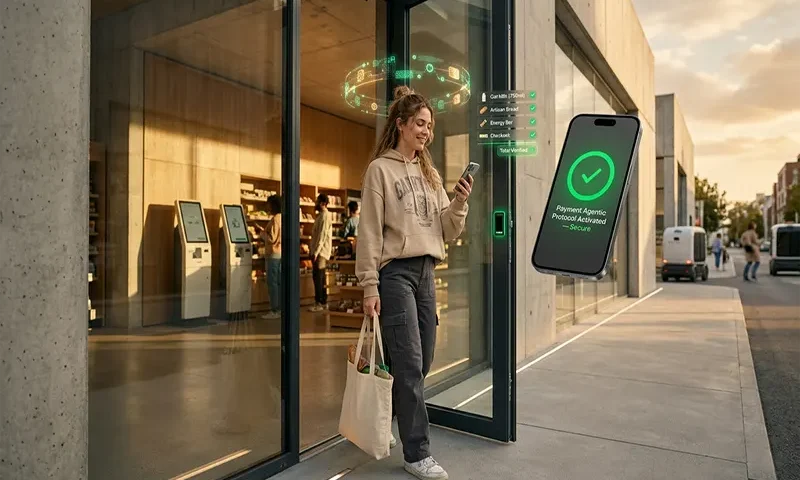
Integrating Agentic AI Payment Protocols for Autonomous Shopping
In the fintech landscape of 2026, we are witnessing the transition from “Conversational Commerce” to “Agentic Commerce.” For years, AI served as a sophisticated recommendation engine—a digital shop assistant that curated lists for human approval. Today, the paradigm has shifted toward Agentic AI: autonomous systems capable of reasoning, planning, and executing complex workflows without constant human intervention.
The most critical friction point in this evolution is the financial transaction. For an AI to truly shop on behalf of a human or an enterprise, it requires more than just an algorithm; it requires a Financial Identity and a secure, programmable payment protocol. Integrating these protocols is the final step in realizing the “Zero-Friction Economy.”
The Shift from Assistant to Agent: The Autonomous Mandate
Traditional e-commerce relies on the “Click-to-Pay” model, where a human must authenticate every transaction through a GUI (Graphical User Interface). Agentic AI bypasses the GUI entirely, interacting … READ MORE

Gender-Neutral Minimalist Streetwear for Gen Alpha and Gen Z
The fashion landscape of 2026 is witnessing a seismic shift that transcends mere aesthetics. We are currently observing the “Great Merging,” a cultural moment where the rigid boundaries of the traditional fashion industry are dissolving. For Gen Z (born 1997–2012) and the ascending Gen Alpha (born 2010–2024), clothing has ceased to be a tool for gender performance. Instead, it has become a canvas for Gender-Neutral Minimalism—a style rooted in inclusivity, utility, and a “less but better” philosophy.
In this new era, the “Menswear” and “Womenswear” labels are increasingly viewed as relics of a binary past. Today’s youth are looking for a universal uniform that prioritizes the human form over gendered expectations.
The Death of the Binary: From Unisex to Fluidity
The term “unisex” used to mean making clothes that looked like men’s clothes and hoping women would wear them. In 2026, the movement has evolved into true Gender-Neutrality. … READ MORE

Best Quiet Luxury Bedroom Furniture in Earthy Mocha Tones
In the fast-paced, high-resolution world of 2026, the home has moved beyond being a mere residence; it has become a sanctuary for sensory recovery. As we move further away from the stark, clinical minimalism of the previous decade—the era of “millennial grey” and cold whites—we find ourselves gravitating toward colors that feel like an embrace. Leading this charge is a sophisticated palette of earthy mocha tones.
Mocha is the “new neutral” of the year, offering a richness that grey lacks and a versatility that black cannot provide. It is the color of fertile earth, sun-drenched clay, and velvety espresso. When paired with the philosophy of Quiet Luxury, these tones create a bedroom environment that doesn’t scream for attention but rather whispers of timelessness, quality, and deep, restorative rest.
Defining ‘Quiet Luxury’ in the 2026 Bedroom
Quiet Luxury is an ethos of “less but better.” In the context of … READ MORE
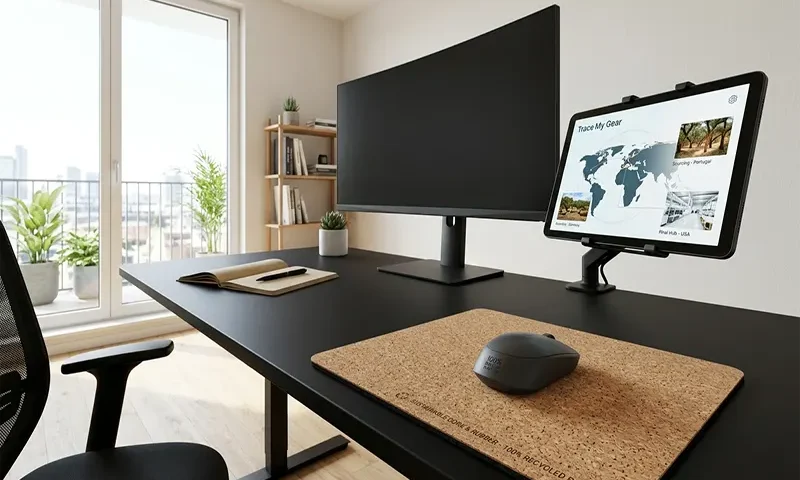
Ethical Work-from-Home Essentials with Traceable Supply Chains
The global shift toward remote work was initially hailed as a victory for the environment—fewer commutes meant a drastic reduction in carbon emissions. However, as the “home office” transitioned from a temporary kitchen-table setup to a permanent fixture of modern life, a new environmental and ethical challenge emerged. The sudden surge in demand for desks, ergonomic chairs, and tech peripherals led to a gold rush for mass-produced furniture, often sourced through opaque, complex supply chains that hide significant ecological and human costs.
In 2026, the standard for “green” has shifted. It is no longer enough for a product to be made of “recycled materials.” Consumers are now demanding Radical Transparency. This means looking for a Traceable Supply Chain: a system where every step of a product’s journey—from the extraction of raw materials to the final assembly—is documented, verified, and open to public scrutiny.
The Pillars of an Ethical
… READ MORE